
UNSW Sydney · School of Mechanical and Manufacturing Engineering
Artificial Muscles and
Wearable Technology Lab
Fibres that contract, twist, sense and heal.
We design fibre-based artificial muscles, soft robotic cardiac assist devices and wearable sensing technologies, from the spinning line through to the clinic.
- Artificial muscles
- Soft robotics
- Cardiac assist
- Smart textiles
- Wearable sensing
About the lab
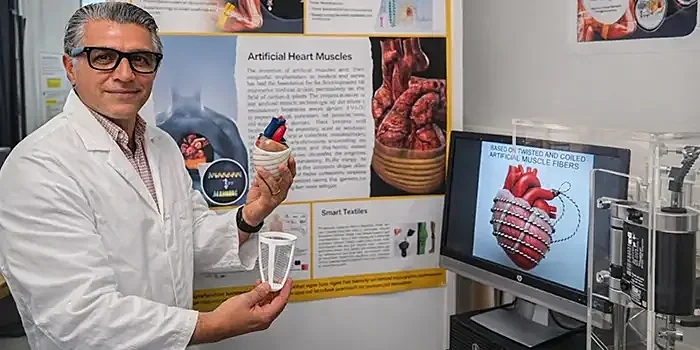
Materials that do the work of muscle.
A muscle is a soft actuator that turns energy into motion at the scale of a fibre. We build synthetic versions. Twisting and coiling polymer fibres, carbon nanotube yarns and conducting composites gives filaments that contract, rotate and generate force when they are heated, charged or wetted, which we then engineer into devices that have to work inside the body.
Our flagship programme is a soft robotic cardiac sleeve that wraps a failing heart and assists its contraction without ever touching blood. Alongside it we develop piezoelectric and conductive textiles for health monitoring, self-powered sensors, and fibre depots for localised drug delivery.
The lab is led by Dr Javad Foroughi, inventor of torsional carbon nanotube artificial muscles, and is part of the ARC Research Hub for Connected Sensors for Health.
Research areas
Five research areas.
Everything in the lab starts as a fibre. What changes is the function it is engineered to perform: actuation, cardiac support, physiological sensing, power generation or drug delivery.
Actuation
Fibre-based artificial muscles
Twisted and coiled yarns, carbon nanotube muscles and electrothermal actuators with large stroke and high specific work.
Read moreCardiac
Soft robotic cardiac assist
A contractile sleeve that supports a failing heart from the outside, avoiding blood contact and the bleeding and clotting risks that come with it.
Read moreSensing
Wearable and implantable sensors
Piezoelectric nanofibers, conductive textile yarns and contactless monitoring for continuous, unobtrusive health data.
Read morePower
Self-powered devices
Nanogenerators and energy harvesters woven into fabric, so a wearable device can run without needing its battery changed.
Read moreTherapeutics
Therapeutic fibres and drug delivery
Coaxial hydrogel and biopolymer fibres that release a drug where it is needed, and biopolymer wound dressings.
Read moreOutput
Selected publications
More than 250 peer-reviewed papers, including five in Science, across all five threads.
See publications01 · Actuation
Fibre-based artificial muscles
- Twisted & coiled yarns
- Carbon nanotubes
- Electrothermal
- Electrochemical
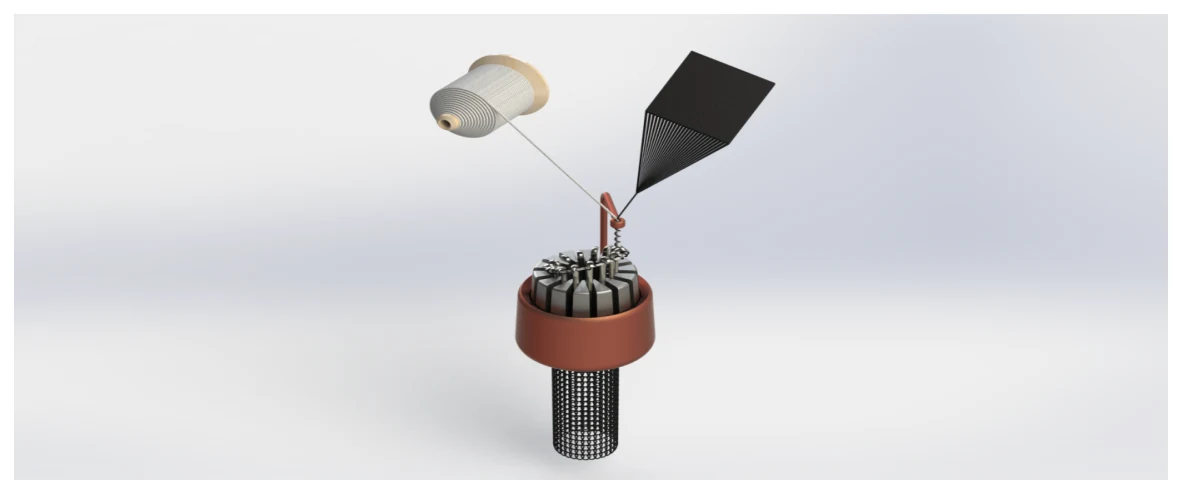
Insert twist into a fibre and it stores torsional energy. Keep twisting and it coils, turning that torsion into a spring that contracts when heated. This is how twisted and coiled artificial muscles work, and it lets nylon fishing line or carbon nanotube yarn outperform natural muscle in stroke and specific work.
We work on the full chain: spinning the fibre, setting the twist and coil, driving it electrothermally or electrochemically, and modelling the actuating fabric it becomes.
Earlier muscles worked by heating and cooling, which wastes energy and limits speed. The muscles in our 2021 Science paper charge and discharge like a battery instead, so they run at body temperature.
We discovered that a simple modification to the material resulted in a huge boost in the amount of contraction the muscle makes, especially at high speeds, and without the need for heating or cooling.
Dr Javad Foroughi · University of Wollongong media release, February 2021
Foroughi J, Spinks GM, Wallace GG, et al. Torsional carbon nanotube artificial muscles. Science 334, 494 to 497 (2011).
Chu H, et al. (incl. Foroughi J). Unipolar stroke, electroosmotic pump carbon nanotube yarn muscles. Science 371 (2021).
02 · Cardiac
Soft robotic cardiac assistance
- Cardiac sleeve
- Non-blood-contacting
- Heart failure
- Clinical translation
Heart failure affects an estimated 64 million people worldwide. In advanced cases medication is combined with a ventricular assist device: an implantable pump that helps circulate blood, but carries risks of stroke, bleeding and clotting because blood contacts metal and plastic, so patients need anticoagulants.
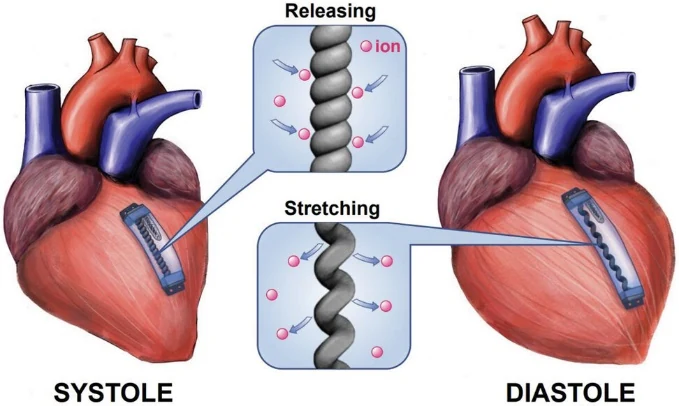
Our alternative wraps the outside of the heart in a sleeve of artificial muscle that contracts and twists with the cardiac cycle. Because it never enters the bloodstream, it may be a safer option for patients who cannot tolerate anticoagulation.
The programme runs from actuator design and biocompatible encapsulation through to large-animal testing and the regulatory path to first-in-human use. It is supported by a NSW Health Cardiovascular Collaborative Grant, with cardiothoracic surgeons at Hannover Medical School and clinical partners in Sydney.
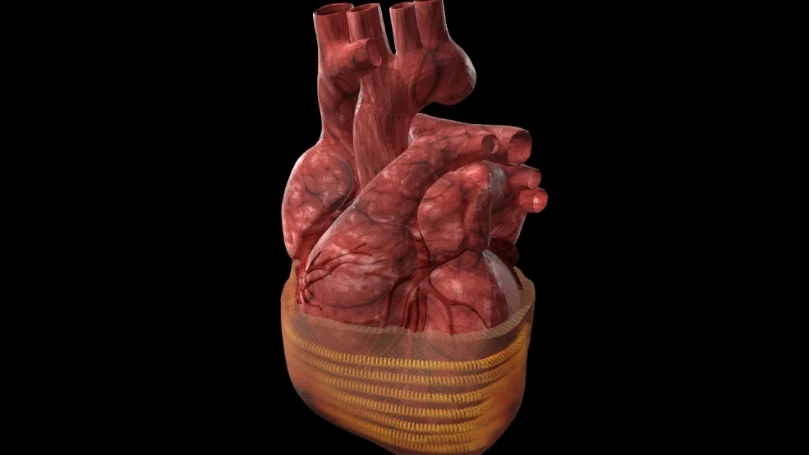
The soft robotic heart sleeve does not come into contact with blood, so the device may help to lower patient risk. We hope that this device can help to stabilise patients while they wait for a heart transplant.
Dr Javad Foroughi · NSW Health, Office for Health and Medical Research, May 2026
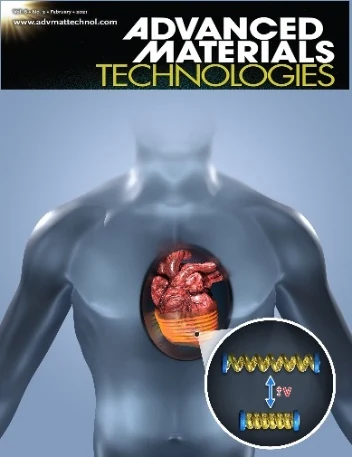
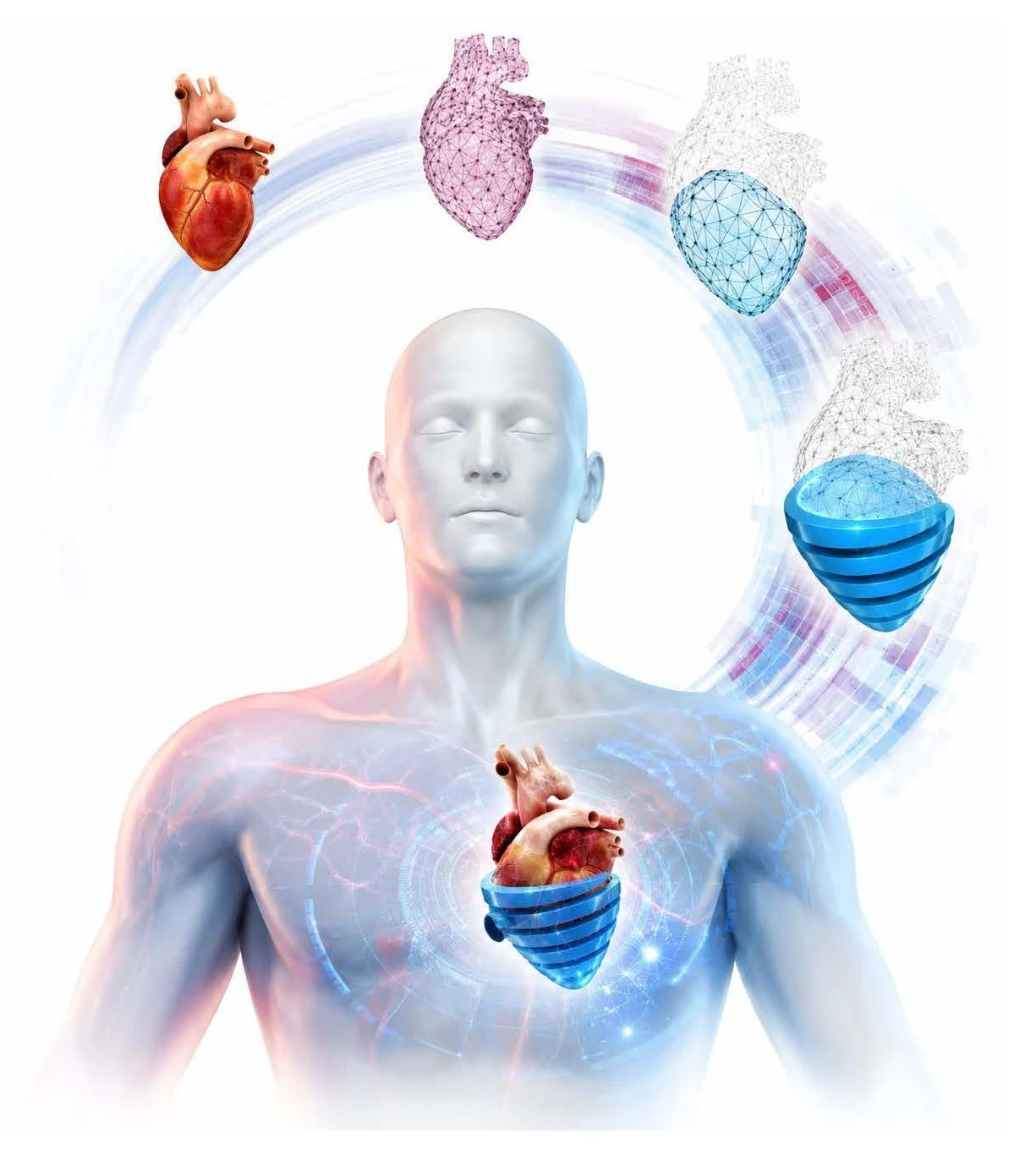
Foroughi J, Nazari H, Lovell N, Hayward C, Wang CH, Ruhparwar A. Clinical translation and engineering challenges of soft robotic cardiac sleeves for heart failure. Nature Communications 17, 8254 (2026).
Weymann A, Foroughi J, et al., Ruhparwar A. Artificial muscles and soft robotic devices for treatment of end-stage heart failure. Advanced Materials 35 (2023).
03 · Sensing
Wearable and implantable sensors
- Piezofibers
- Smart textiles
- Chipless RFID
- Vital signs
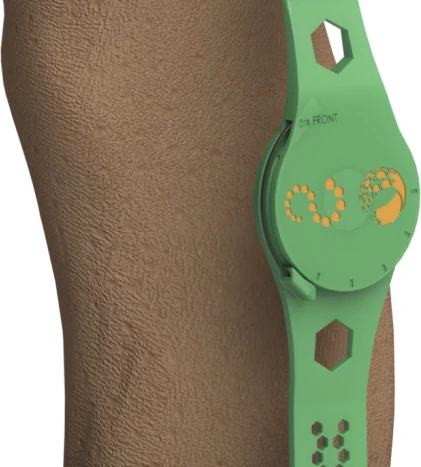
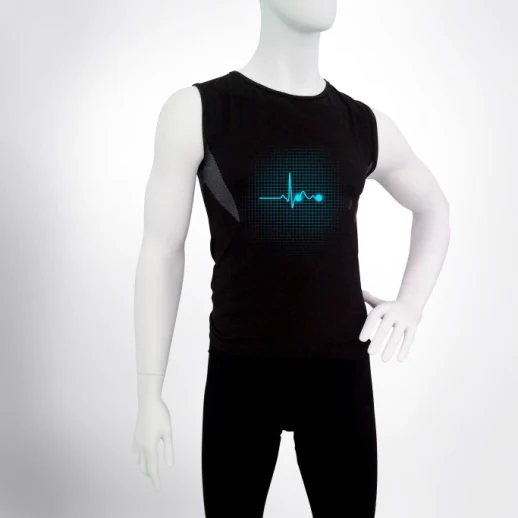
A sensor worn all day has to be unobtrusive, so we build the sensing element into the yarn itself: stretchable piezoelectric fibres that generate a signal when they deform, carbon nanotube and spandex yarns that track joint flexion, and embroidered antennas for chipless identification.
Applications run from knee and gait monitoring to workplace exposure, respiration and heart rate, including contactless methods that need nothing on the body. This work sits inside the ARC Research Hub for Connected Sensors for Health.
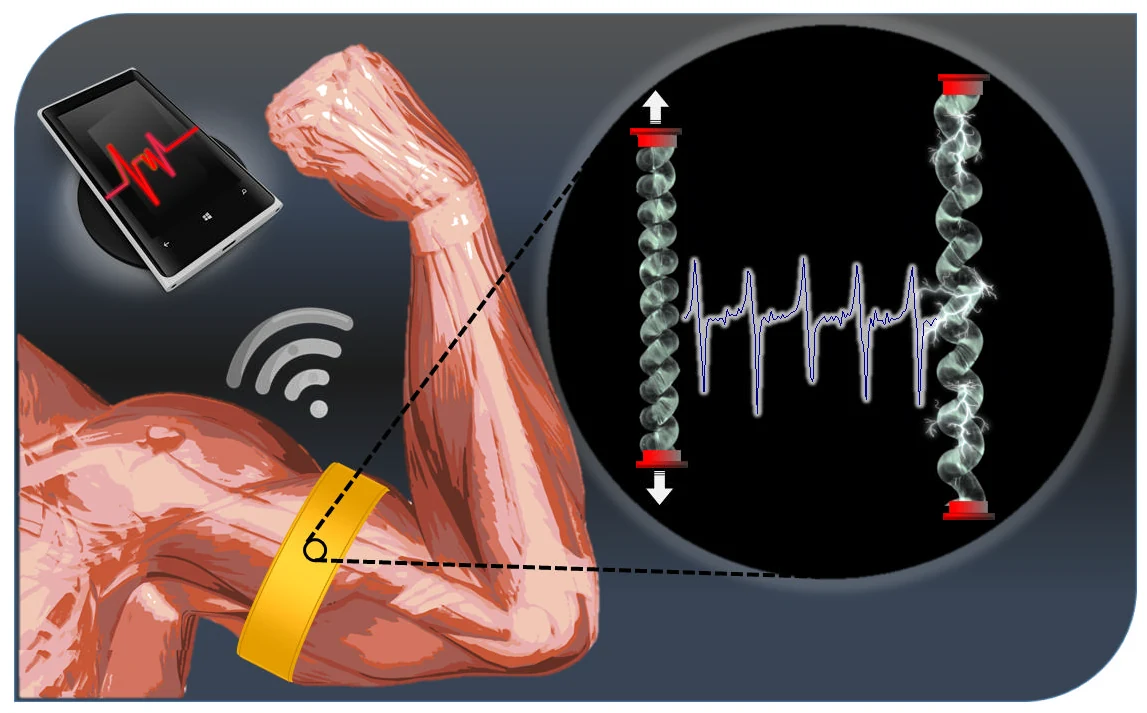
Mokhtari F, et al. Highly stretchable nanocomposite piezofibers: a step forward into practical applications in biomedical devices. Journal of Materials Chemistry B 12, 9727 to 9739 (2024).
Fay CD, et al. Wearable carbon nanotube-spandex textile yarns for knee flexion monitoring. Advanced Sensor Research 2 (2023).
04 · Power
Energy harvesting and self-powered systems
- PVDF nanofibers
- Nanogenerators
- Supercapacitor fibres
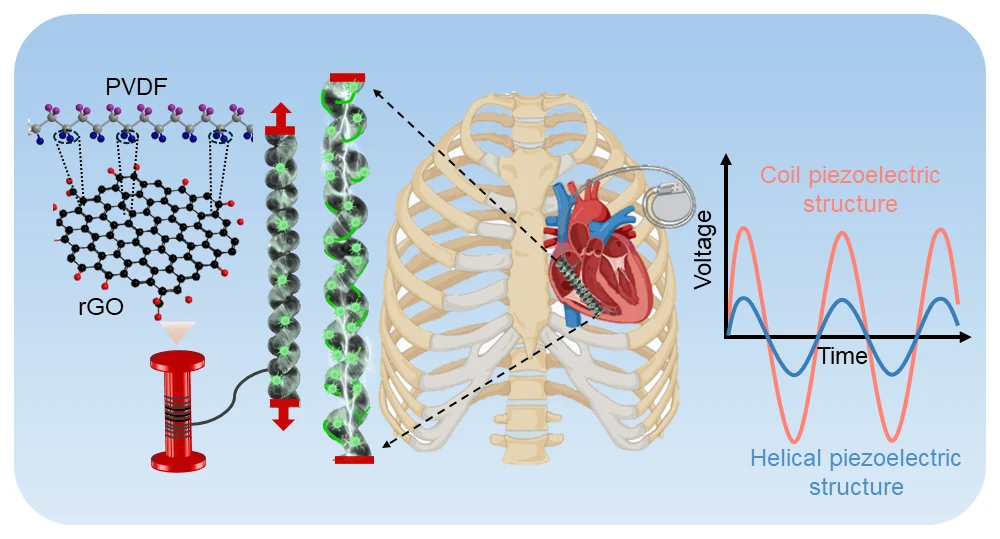
An implanted or wearable sensor is limited by its power source. We make fibre and fabric harvesters from electrospun and melt-spun piezoelectric polymers that turn body movement into electricity, with wet-spun supercapacitor fibres to store it.
The aim is a device that never needs its battery changed, with the harvester, the storage and the sensor in the same textile. Replacing a pacemaker battery means further surgery, so a device powered by the heartbeat removes a known clinical risk.
Gao Z, et al. (incl. Foroughi J). Advanced energy harvesters and energy storage for powering wearable and implantable medical devices. Advanced Materials 36 (2024).
Mokhtari F, Spinks GM, Sayyar S, Cheng Z, Ruhparwar A, Foroughi J. Highly stretchable self-powered wearable electrical energy generator and sensors. Advanced Materials Technologies 6 (2021).
05 · Therapeutics
Therapeutic fibres and drug delivery
- Coaxial biofibers
- Localised chemotherapy
- Wound dressings
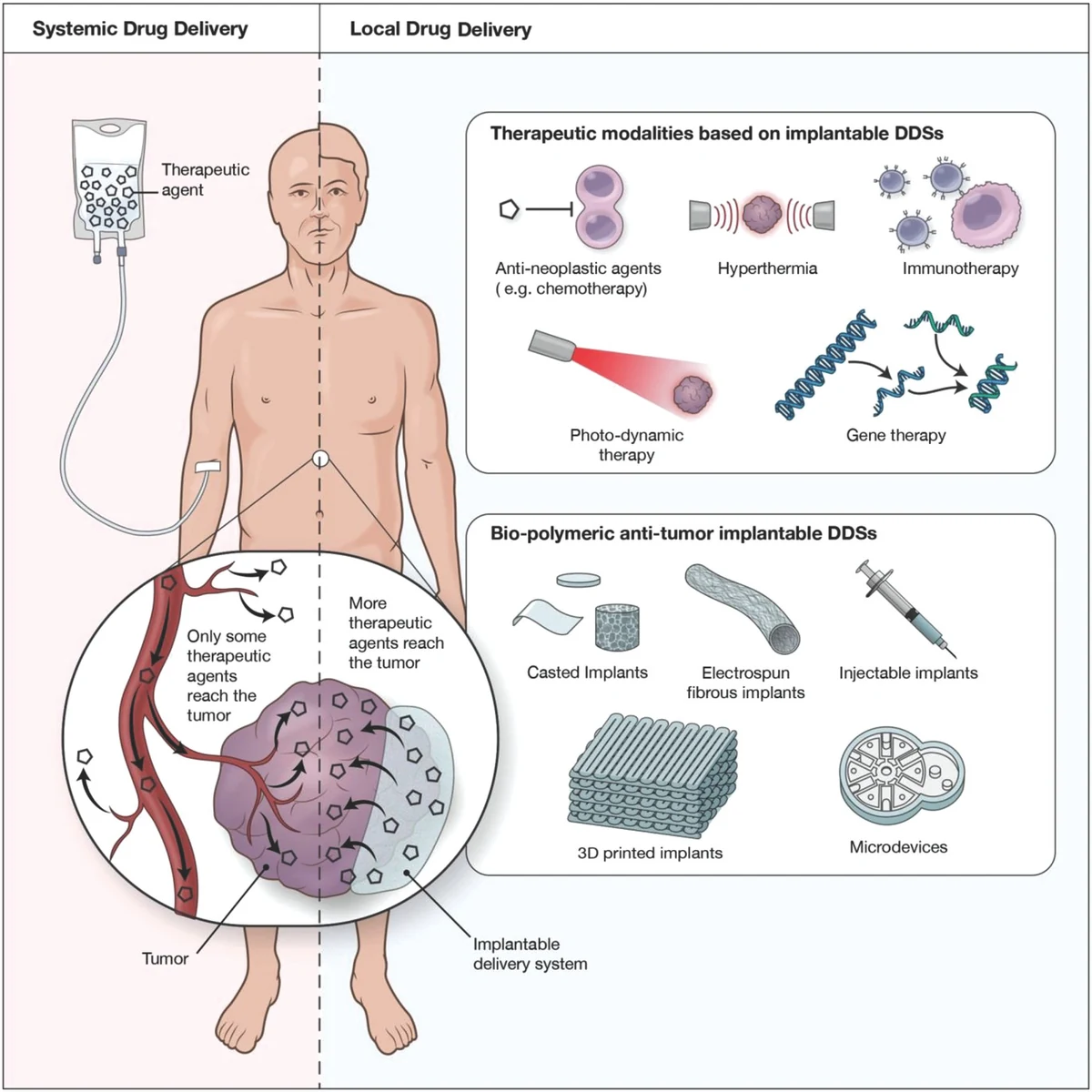
The same wet-spinning platform that makes an actuator can make a drug depot. Our coaxial hydrogel and biopolymer fibres hold a chemotherapeutic in the core and release it slowly at the tumour site, cutting the systemic dose while keeping local concentration high.
Work here has covered dual gemcitabine and paclitaxel delivery in pancreatic cancer models, mussel-inspired adhesive depots, photothermal combination therapy, and ulvan wound dressings spun from seaweed.
Wade SJ, et al. (incl. Foroughi J). Dual delivery of gemcitabine and paclitaxel by wet-spun coaxial fibers. Advanced Healthcare Materials 9 (2020).
Foroughi J, Ruhparwar A, Aloko S, Wang CH. Manufacturing ulvan biopolymer for wound dressings. Macromolecular Materials and Engineering 309 (2024).
People
Dr Javad Foroughi
Senior Research Fellow · School of Mechanical and Manufacturing Engineering, UNSW Sydney
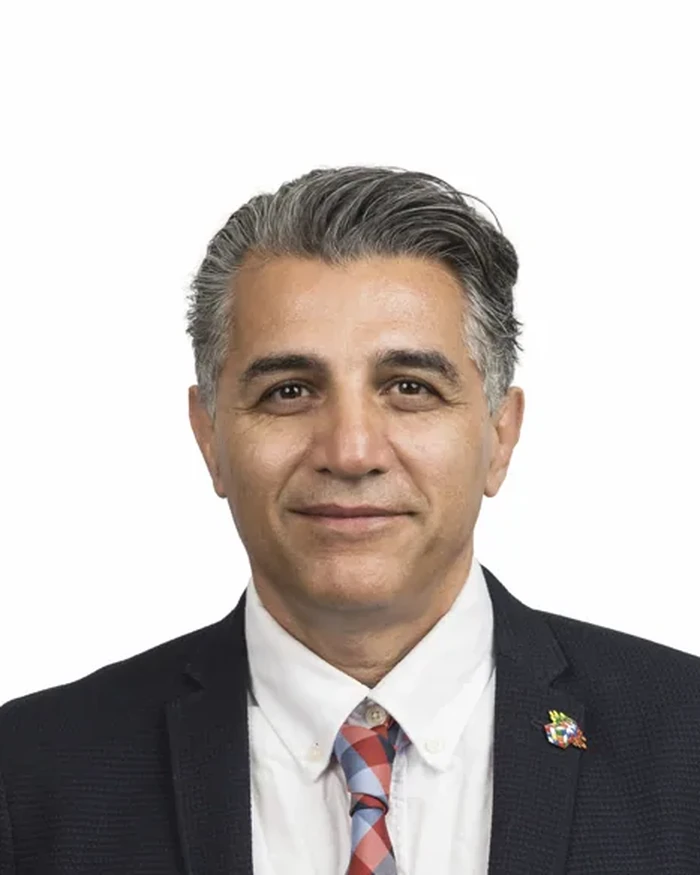
Javad Foroughi leads the Artificial Muscles and Wearable Technology Lab. He is a Chief Investigator in the ARC Research Hub for Connected Sensors for Health and a Visiting Professor in Cardiothoracic, Transplantation and Vascular Surgery at Hannover Medical School.
He invented torsional carbon nanotube artificial muscles, first reported in Science in 2011, and has published more than 250 papers including five in Science. He is listed among the Stanford and Elsevier world top two per cent of scientists and has attracted more than A$12.5 million in competitive funding.
He completed his PhD in materials engineering at the University of Wollongong in 2010.
Research team
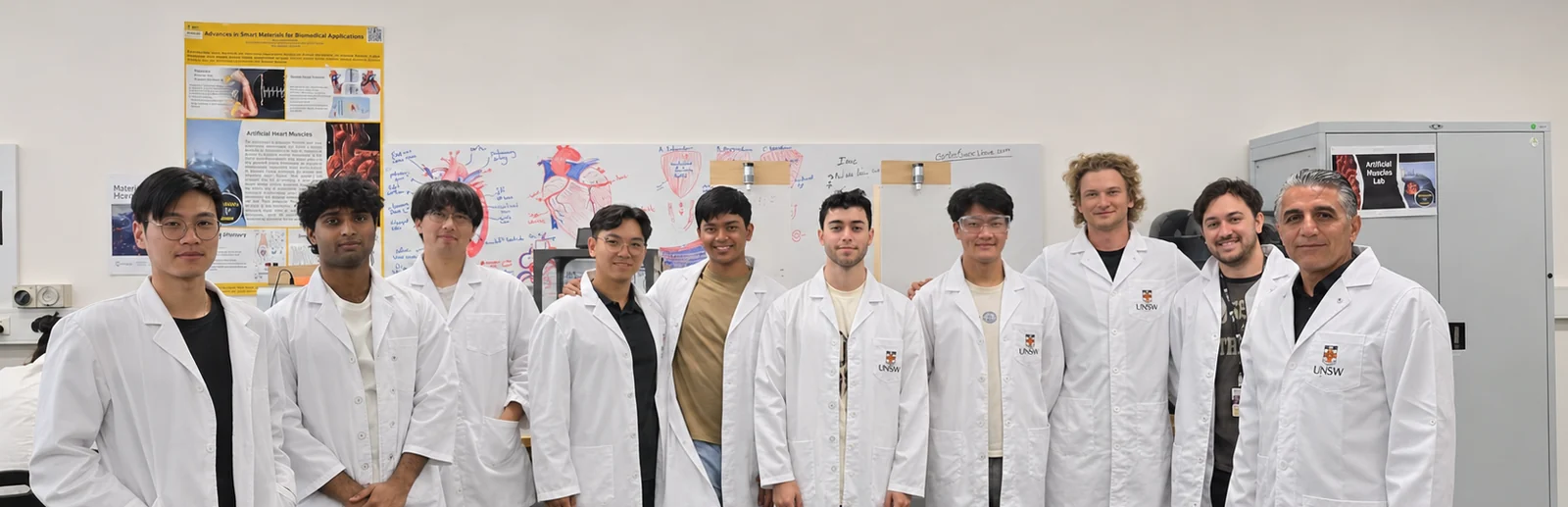
The lab brings together postdoctoral researchers, PhD candidates, research assistants and thesis students working across materials, mechanics, electronics and biomedical engineering, alongside clinicians and industry engineers.
Teaching
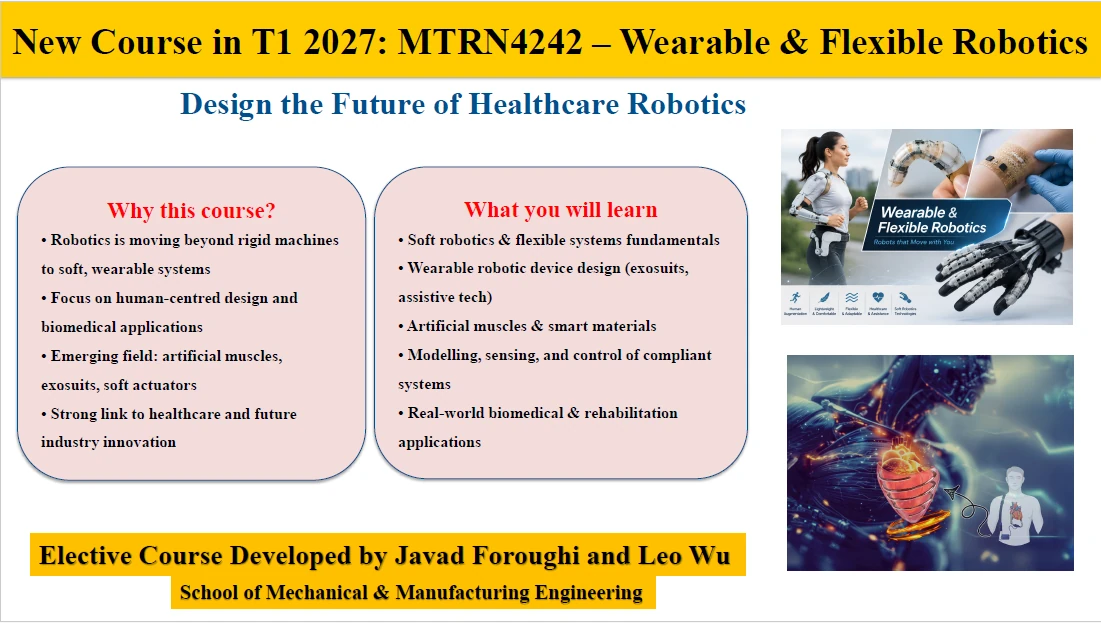
Dr Foroughi supervises honours and masters thesis projects through MMAN4951 and MMAN9451. From Term 1, 2027 he also teaches MTRN4242 Wearable and Flexible Robotics, a new elective in the School of Mechanical and Manufacturing Engineering developed with Dr Leo Wu. The course covers soft robotics and flexible systems, wearable device design, artificial muscles and smart materials, and the modelling, sensing and control of compliant systems.
Collaborators
- Prof Arjang RuhparwarCardiothoracic, Transplantation and Vascular Surgery, Hannover Medical SchoolDepartment · LinkedIn
- Prof Christopher HaywardSchool of Clinical Medicine, UNSW Sydney and St Vincent's Hospital SydneyProfile · LinkedIn
- Prof Nigel LovellSchool of Biomedical Engineering, UNSW SydneyProfile · LinkedIn
- Prof Chun H. WangSchool of Mechanical and Manufacturing Engineering, UNSW SydneyProfile · LinkedIn
- Prof Geoffrey SpinksIntelligent Polymer Research Institute, University of WollongongProfile · LinkedIn
- Prof Ray BaughmanAlan G MacDiarmid NanoTech Institute, University of Texas at DallasProfile
Publications
Selected and recent work.
A selection. The full list of more than 250 papers is on the UNSW profile and Google Scholar.
Full publication listLatest
News.
Heart failure treatment may be transformed by a next-generation medical device that wraps around the heart and imitates the natural twisting and contracting of cardiac muscle.
NSW Health, Office for Health and Medical Research · 22 May 2026
Partners
We work with hospitals, industry and research institutes to take laboratory materials into products and patients.
- ARC Research Hub for Connected Sensors for Health
- NSW Health
- CardioBionic
- Hannover Medical School
- Ocius Technology
- Eczanes Pharmaceuticals
- Lincoln Agritech
- Geofabrics
- Illawarra Health and Medical Research Institute
- University of Wollongong
- UT Dallas NanoTech Institute
Join the lab
Opportunities across all five research threads.
Projects combine laboratory work, modelling and data analysis, with clinicians setting the requirements a device has to meet. We welcome students and researchers from mechanical, biomedical, mechatronic and materials engineering backgrounds.
PhD
Higher degree research
Projects across artificial muscles, cardiac soft robotics, wearable sensing and energy harvesting. Domestic and international applicants welcome. UNSW scholarship rounds apply.
Undergraduate
Honours and masters thesis
Thesis projects through MMAN4951 and MMAN9451, usually attached to an active experimental programme rather than a standalone exercise. Coursework students can also take MTRN4242 Wearable and Flexible Robotics, taught by Dr Foroughi from Term 1, 2027.
Postdoctoral
Research fellows
Positions open as grants are awarded. Fellowship applicants looking for a host at UNSW are encouraged to get in touch early.
Visiting
Visiting researchers
We host visiting students and academics for research stays, particularly from partner institutions in Europe and Asia.
How to apply
Email Javad directly.
Complete the fields and a draft enquiry is prepared below. Nothing is sent from this page. The message opens in your own email application, where you can edit it and attach your CV before sending.
Draft
Contact
Find us at Kensington.
Address
School of Mechanical and Manufacturing Engineering
Ainsworth Building (J17)
UNSW Sydney, Kensington NSW 2052
Australia
Enquiries
Students and prospective researchers, see Join the lab.
Industry and clinical partners, email Javad directly.
Media enquiries, contact UNSW Media alongside the lab.